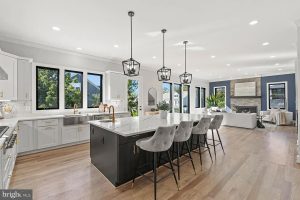


White quartz is a useful starting point for blue cabinets when you want a clear, light contrast. Pale gray offers a softer combination, while charcoal or black creates a deeper look. Match the quartz undertone to your exact cabinet color, especially with blue-gray, navy and green-blue finishes.
5 Key Takeaways
- White quartz provides contrast with navy and medium blue cabinetry.
- Light gray quartz can create a softer transition with blue-gray cabinets.
- Black countertops need careful balance with walls, backsplash and lighting.
- Vein color and pattern scale matter as much as the quartz background.
- Check cabinet and countertop samples together in your kitchen before ordering.
Choosing countertops for blue cabinets starts with the shade of blue. Navy, dusty blue and teal can all appear in blue kitchens, but they do not behave the same way beside a white or gray surface. Your floor, wall paint and lighting also affect the combination.
Use the pairings below to narrow your options. These are design directions to test in your room, rather than a claim that one quartz color suits every blue cabinet finish.
Start with Your Cabinet Shade
Place your cabinet sample beside a plain white sheet in daylight. This can help you notice whether the blue leans toward gray, green or violet. It is a comparison aid, not a substitute for seeing the countertop and cabinet together.
Also consider how dark the finish appears beneath upper cabinets or away from windows. A navy door can read almost black in low light. If both the countertop and cabinets are dark, the backsplash becomes especially important in defining the work area.
| Cabinet shade | Quartz options to test | Design direction |
|---|---|---|
| Navy or deep blue | Neutral white, soft white, pale gray | A distinct light countertop above dark cabinetry |
| Blue-gray | Soft white, light gray, subtle gray veining | A quiet palette with gentle contrast |
| Light or dusty blue | White, pale greige, charcoal | Either a soft blend or a darker countertop outline |
| Teal or green-blue | Warm white, restrained cream, neutral gray | A neutral surface around a stronger cabinet color |
| Bright medium blue | Plain white or lightly patterned white | Keep the cabinetry as the main color feature |
Blue Cabinets with White Quartz Countertops
White quartz creates a clear boundary above blue cabinet doors. It is a practical design starting point for navy kitchens, where a light work surface can keep the palette from becoming too dark.
Compare at least two whites. A neutral white may look crisp, while an off-white can soften the combination. A strongly creamy sample may look yellow beside a cool blue, especially if the backsplash is a cooler white.
Bring the sink color into the comparison as well. A white sink and white countertop do not need to match perfectly, but you should like the difference when they touch. Do the same with any white upper cabinets or painted trim.
Plain White or Marble-Look Quartz?
Plain white keeps attention on cabinet color and shape. It can work well when your backsplash, floor or lighting already provides a pattern. A lightly veined white adds movement while keeping the general palette simple.
Large, bold veins create a stronger focal point. Before selecting them, review how the pattern will cross the island and where seams may fall. A small sample cannot show the spacing of a full slab design.
Blue-Gray Kitchen Cabinets with White Countertops
Blue-gray cabinets often suit a softer white or pale gray countertop because the difference between the surfaces is less abrupt. Start with the gray undertone in the cabinet finish, then look for a compatible background or vein color.
If your cabinets look green-gray in one part of the room and blue-gray in another, review samples in both places. Choosing only under showroom lighting can hide the variation that matters most at home.
For a quiet scheme, use one main pattern. For example, pair a lightly veined white countertop with a simple backsplash and understated floor. If the tile has a strong pattern, a calmer countertop gives it room to stand out.
Gray Quartz Countertops with Blue Cabinets
Pale gray quartz offers less contrast than bright white and may suit a room where you want the surfaces to blend gently. It is especially useful to compare when the kitchen includes stainless steel, gray tile or a cool neutral floor.
Do not assume all gray materials match. Some gray quartz leans warm, while other designs have blue, green or violet undertones. Place the cabinet, countertop and floor samples together, leaving them close enough to judge their edges.
Medium gray adds more depth but may make a navy kitchen feel darker. If that is the look you want, keep the backsplash simpler and lighter so the work surface remains visually distinct from the upper wall.
Blue Cabinets with Black Countertops
Black quartz works as a bold contrast with pale blue or as part of a deeper palette with navy. Neither combination is automatically better. The choice depends on your room’s light, size and surrounding materials.
A polished black surface can reflect a light fixture, but that does not make it a substitute for a light countertop. In a room with limited daylight, test a dark sample under the lights you use for cooking before committing.
Soft white walls or a pale backsplash can balance a dark cabinet and countertop combination. If the room already has a dark floor, consider whether you want three large dark surfaces or a lighter break between them.
Ask about cleaning and finish expectations. Fingerprints, dried water and crumbs may be more noticeable on a plain dark surface. Review the selected manufacturer’s guidance rather than assuming every black quartz finish behaves alike.
Match the Backsplash and Hardware
Choose the Countertop Before the Tile
Once you choose a countertop, compare backsplash samples directly against it. If the quartz has sweeping veins, a quiet tile can keep the kitchen from looking busy. Plain quartz gives you more freedom to add texture in the backsplash.
Check grout alongside the tile. High-contrast grout creates a visible grid, which can compete with strong slab veining. A closer grout color produces a less pronounced pattern.
Use Metal Finishes to Set the Mood
Brass tones add warmth to blue cabinetry, while nickel and stainless finishes create a cooler effect. Matte black offers a graphic accent. Repeat your main choice across a few details rather than adding several unrelated finishes at once.
Choose a hardware sample against the door and countertop together. The same handle can look warm against one white and dull against another.
Keep Flooring in the Palette
A warm wood floor can soften a blue-and-white kitchen. A gray floor may support a cooler scheme. If the flooring stays, include it in every sample comparison so the countertop connects the room rather than matching only the cabinets.
Three Blue Kitchen Palettes to Compare
Crisp contrast: navy cabinets, neutral white quartz, a simple pale backsplash and nickel hardware. Try this when you want the cabinetry to be the main color feature.
Soft and quiet: blue-gray cabinets, white quartz with fine gray movement, a restrained backsplash and light wood accents. Keep the countertop pattern gentle so the palette remains calm.
Deep and dramatic: dusty blue cabinets, charcoal quartz, light walls and warm metal details. Judge the combination after sunset as well as in daylight.
For a two-tone kitchen, test the countertop against both cabinet finishes. A white perimeter and blue island may share one quartz design, which can help the separate cabinet colors feel connected.
How to Choose and Order Your Quartz
Shortlist two or three designs from the quartz color collection. Bring a painted cabinet sample, flooring sample and room photos when you compare them in person. A photograph of blue paint alone is not reliable enough for a final color decision.
Review a full slab image or larger display, then ask how the design would be laid out in your kitchen. Confirm the direction of the veins, visible seams and any waterfall panels before approving fabrication.
Choose your sink and edge profile before the final quote. Different cutouts, backsplash heights and edges can change both appearance and fabrication work. The quartz countertop cost guide can help you prepare an initial budget.
For existing cabinets, check that they are secure, level and suitable for the new countertop. Confirm who handles removal, disposal, sink mounting and plumbing so the project scope is clear.
Care for Your New Quartz Surface
Quartz is generally nonporous and does not need routine sealing. Follow the specific product’s cleaning instructions, wipe spills promptly and use approved cleaners. Avoid harsh chemicals and abrasive cleaning tools.
Use cutting boards and trivets. Quartz is resistant to everyday wear, but it can still chip, scratch or suffer heat damage. Color and finish do not remove the need for sensible care.
Questions About Quartz and Blue Cabinets
What color countertop goes best with navy cabinets?
White and pale gray are useful choices for light contrast. Charcoal creates a darker palette. Compare the actual samples with your backsplash and flooring to decide which effect you prefer.
Can blue-gray cabinets work with warm white quartz?
Yes, when the undertones work together. Test a warm white beside a neutral white in your room. The warmer sample should look intentional rather than unexpectedly yellow.
Can I pair blue cabinets with granite instead?
Yes. Natural granite is another option if you prefer slab-to-slab variation. Compare the specific stone, care needs and installed quote; cabinet color does not require one countertop material.
Bring Your Blue Kitchen Palette Together
Start with the exact cabinet shade, decide how much contrast you want and compare the whole room’s materials. Badger Granite can help you explore quartz options for a kitchen remodel in Oak Creek or the Milwaukee area.